Showing posts with label tucson veterinarians. Show all posts

Wednesday, January 8, 2014

Welcome to 2014!

Happy 2014! We all hope you had a fantastic and safe holiday season and are now recovering by calling all of your friends who live back east and telling them how tan you are.

A new year is a great time to make a new start. We promise ourselves to make broccoli a bigger part of our diet and limit ice cream for dinner to special occasions. We also promise to be better at being us.

Our pets can benefit from the new us too. Research has shown for some time that people who walk their dogs are fitter. Our pets benefit from the exercise and the ability to explore the sights and sounds of the bigger world. Dogs that go for walks benefit from the socialization as much as we do.

I run with my dogs - well, one dog. This dog:

Kate on a mountain bike ride


These two dogs
Miss Kitty

Ketchum

Stay home. They stay home for two rather inexcusable reasons. First, these two, as the pictures above illustrate, embrace dirt, and all sorts of unknown, and unknowable, sketchy whatnot. Frankly they are kind of yucky.

Second, Kitty is well behaved, but, Ketchum - not so much. Her recall is dubious, her sit is non-existent and she thinks a leash is a lethal device and will flop around like a trout if I put one on.

This is sad - after all, I know how to bathe a dog and I certainly know how to leash train a dog.

So for 2014, I promise this blog will contain more stories of these two neglected pooches having adventures with their mom - which, of course, they really really want to do.

To get that achieved, I intend to use some of the coupons we have here at Ventana Animal Hospital to help everyone fulfill their pet's new year's resolutions. We have bags of Purina OM dog food for pets who need a jump start to a slimmer waistline, and for slackers like me, we have coupons to Central Pet for grooming and training.

Not only will Ketchum and Kitty benefit from smelling slightly less offensive, but learning to walk on a leash and come when called will allow them to go running and cycling with me.

Becoming better us's sometimes means helping our pets become better them's.

We look forward to seeing your better you in 2014, and we are very happy to help you help your pets become better them's.

Monday, July 8, 2013

Senior Summer!

One of my favorite questions is: "how old is my pet in human years?" Interestingly that answer differs with the species and breed being discussed. A 10 year old chihuahua is a great deal younger than a ten year old mastiff. There are charts here in the hospital that will tell you that your ten year old cat is 56 years old while your 75 pound German Shepherd is 66 years old.

To make things simple we in the veterinary profession have created the phrase, "senior at seven" as a basic guideline to help us remember when we need to begin discussing senior care.

Senior citizens make up the vast majority of both the general pet population and the population here at Ventana. The good news about this is that it means that we are all doing something right.

Preventive care is what has allowed us all to reap the benefits of our pets' longer lives. Luckily as your pets have aged, and as the pet population too has aged, the veterinary community has adapted to to help this new population stay even healthier longer.

One of our senior citizens, Joy, resting after a hard day
Senior pets benefit from a holistic approach to care. Just as we have found that all things are interconnected in human medicine, it is the same with our pets.

Senior pets can suffer the same issues that humans. We see increased issues with joint mobility, weight gain, diabetes, thyroid issues, heart problems and the like. The good news is that many of these issues can be addressed if caught early enough.

Because pets age faster than humans, it behooves us to have them seen more often than yearly. A lot can happen in five years if you are in your sixties. We recommend twice yearly exams. This helps us better monitor fast changing issues such as dental health, weight and behavior.

Many things seen as a 'normal' sign of aging are not. Getting "slow" usually means getting sore. Changing behavior can be caused by early cognitive dysfunction, sight issues, hearing issues or pain. Drinking more or eating smaller meals can also be signs of illness.

While knowing the signs of illness are important, so too is well-checks with your veterinarian. We are better able to assess heart function, weight changes, dental health and feel the abdomen for abnormalities.

If you ask any one of us what we do for our own pets as they age you will receive the same answer - we all do annual blood panels on our senior pets. Even though all of our pets live with educated (one would hope!) veterinary professionals, we have all learned two valuable things over the years: 1) we cannot see what is going on inside our pets - no matter how good we are, and 2) vigilance pays off.

Everyone has a story about a perfectly healthy pet who came in for a routine exam or blood work and we found something that would have otherwise missed. We all like these stories, especially (obviously) if they have happy endings
. We hate seeing pets who have become symptomatic with disease and we catch things too late to help, or too far along to easily turn around.

We all love our pets or we wouldn't be in this profession. This is why often you will get the most candid answers when you ask us what we ourselves do with our own pets. At Ventana Animal Hospital, we consider that our gold standard. We offer nothing to you that we ourselves would not want offered to our own pets, and we will never offer you lesser care than we ourselves provide our own pets.


Monday, February 4, 2013

January Success!

Whoops! it's been a while! We just got so busy with the holidays and Weight Loss Month that we let the blog slide.

Ventana Animal Hospital is not only a Certified Weight Loss Clinic, but we have two Certified Pet Weight Coaches (Liane our Hospital Manager and Rebecca a Certified Veterinary Technician). Both have taken the time to do 10 hours of continuing education to help our patients remain slim and healthy throughout their lives.
8 year old Aussie wrestling the stick from 13 year old German Shepherd

We decided to join the frenzy of weight loss habits changing at the New Year to kick off our own Weight Loss Month. So far so good. We have a poster up in the lobby with our weight loss candidates and they are currently vying for some really nice goodies for the pet who loses the most before the end of March.

Active breeds like border collies can gain weight quickly


Purina Pet Foods has helped us out by offering a whopping $10 off their excellent prescription pet food, OM and their senior weight loss diet (with glucosamine for joints) JM. Check out their weight loss plan online.

Most importantly we helped educate clients on the value of keeping their pets slim. Slim pets live an average of two years longer. They also live those two years (and countless more before) with fewer health issues and more mobility.

Many people think that pets slow down as they age, and while that may be true in some cases, in most cases, even as their racing days lie behind them, slender dogs remain happy and active throughout their lives. Weight gain makes dogs and cats uncomfortable. It makes joints ache and muscles strain. It can cause ligament tears and joint pain.

Kitty, an 8 year old Aussie playing in the mud
So, a huge THANK YOU to Rebecca and Ronnie who helped plan Weight Loss Month. Also a round of cheers to CJ, Gracie, Buddy, Misha, Frank, Pippin and Mary whose owners have stepped up in an effort to help them live healthier, happier, longer lives.

If you would like to know if your pet is overweight, just give us a call at 299-1146 and ask to make an appointment with Becca for a weight evaluation. She can help you formulate a weight loss plan.

Tuesday, November 13, 2012

Digital X-rays


Ventana Animal Hospital is proud to announce one of the many changes that we are constantly making to provide our patients the best diagnostics available. One of these advancements is our new digital radiology capability.

If you have been to your own physician recently for X-rays, you may have seen the bright clear, and immediate results produced by digital radiology.

These images are vastly superior to film radiology, providing our doctors better visual interpretation. They are also produced faster and with no developing materials in the building, are safer for both the staff and the environment.

Additionally, since our staff members have to position your pet for X-rays, the introduction of digital radiology lowers the radiation exposure for pet and staff alike.

Radiology is one of the most important factors in accurate diagnostics for a slew of injuries and diseases. We here at Ventana Animal Hospital are proud of this new technology and the quality care that it provides for your furry family members.

Monday, October 8, 2012

Snake Training

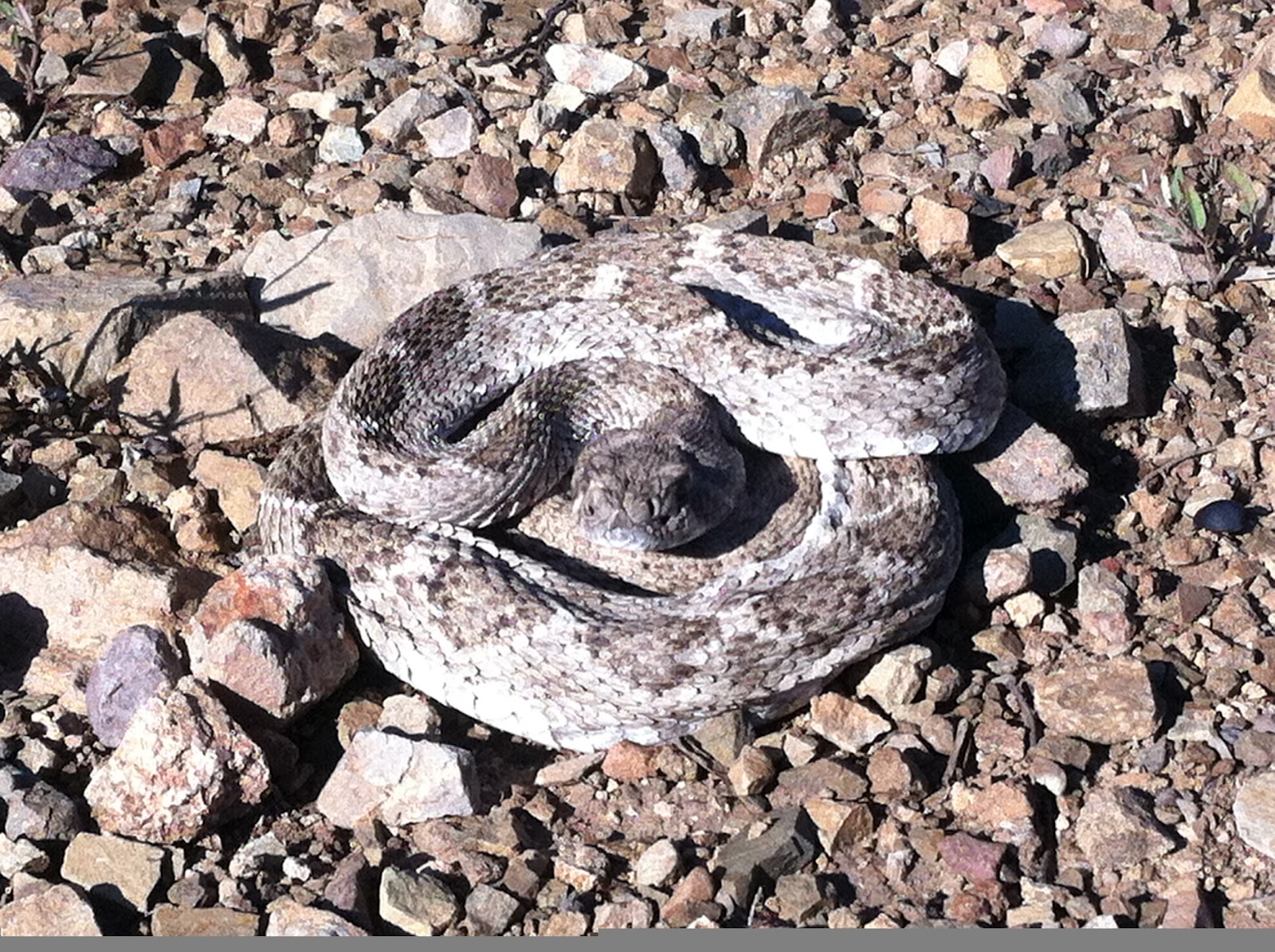
Ventana Animal Hospital stocks antivenin for use in the event of snake bite. We always have at least two vials in the refrigerator. During the summer we will mix up and give this extremely expensive life saving medication to more dogs (and occasionally cats) than we care to.

Honestly, we would like to never use antivenin again. Snake bites in pets (especially dogs) are common in the Tucson. Snakes remain active throughout the year, though spring, summer and fall have the highest incidence of snake strikes. Whether you are hiking Sabino Canyon, sitting on your back porch or bird hunting in Patagonia, snakes are everywhere, and they are active far into the fall.

Rattlesnake venom does several things, the first is that it causes extreme pain followed by swelling to the bite location. The venom then causes changes in the blood which encourages bleeding (this is why we do blood work on snake bite victims). Lastly the venom causes local tissue death called necrosis. The only thing that can counteract the envenomation process is swiftly getting to a veterinarian and receiving antivenin, antibiotics, fluid therapy and pain medication. Depending on the snake species (mojaves are exceptionally venomous), strike location, amount of venom injected by the snake and other factors, use of antivenin is often (but not always) able to save pets' lives.

All dogs are at risk of snake bite. Snakes are not respectful of boundaries and through climbing trees, crawling through drain holes and under gates and even following rodent excavations they can find themselves in even the most impenetrable yard.

Please help us here at Ventana Animal Hospital to never ever see another snake bite again. Get your dogs snake trained. This is the easiest most cost effective method to ensure that your dogs do not engage the snakes that they do encounter.

Snake training (like any training) is not 100% effective. Terriers and bird dogs seem to suffer the most when it comes to failing to heed the warnings issued through snake training. Because of this, most people who do snake training will let you periodically 'test' your dogs to ensure that they 'got' the lesson. In most cases they will let you do this at little to no cost.

Truly, short of packing up and moving to a snake free island, snake training is the most effective cost efficient way to ensure that you never ask us to open up one of those vials of antivenin.

We here at Ventana Animal Hospital believe so strongly in the effectiveness of snake training that we have partnered with Paul Blaushild of Central Pet to provide our customers an exclusive opportunity to save money on this life saving training. Bring any receipt from Ventana Animal Hospital to Paul at Central Pet, and they will give you $5 off snake avoidance training.

Even with swift life saving care, every year we lose at least one pet to snake bite. Please, we don't want it to be your pet. Schedule a trip to Central Pet (or any trainer who can train your pet to avoid snakes) now.


Friday, October 5, 2012

Welcome to Ventana Animal Hospital's Blog!

In an effort to better reach our pet loving community Ventana Veterinary Hospital of Tucson has decided to jump into the world wide web in a big way! This is a very exciting move for our company, and we hope that it will help us bring our excellent service and care standards directly to you, our loyal customers.

Ventana Animal Hospital was started on the North East side of Tucson 18 years by Karen Burrows DVM. Seven years later Dr. M. Nielsen joined the practice. Along with a great veterinary staff, Ventana Animal Hospital continues to grow and provide the friendliest most personal service for your pet's veterinary needs.

We at Ventana Animal Hospital are proud of the contribution that we have made and will continue to make to animal wellness in Tucson.

To that end we are constantly upgrading equipment and technology to better provide the services that pet owners have come to expect from our veterinary team.

In July we introduced our team to a new computer system to better help us track your pet's health, and increase efficiency. We also brought in a new digital x-ray unit which provides superior radiographs for better quality diagnostics.

We also brought in all new in house blood analyzers to help provide faster diagnostics to our patients.

We take our relationships with our clients seriously, and we take our medicine seriously, and we hope that putting our messages about pet health into your hands quicker and cheaper we will help add another dimension to our vison as your favorite neighborhood veterinary office.

Please join us on Facebook to receive minute to minute updates on special events, FDA food recalls, and pet health news.

Thank you for your loyal support. We look forward to 18 more excellent years of providing friendly, conscientious veterinary service.